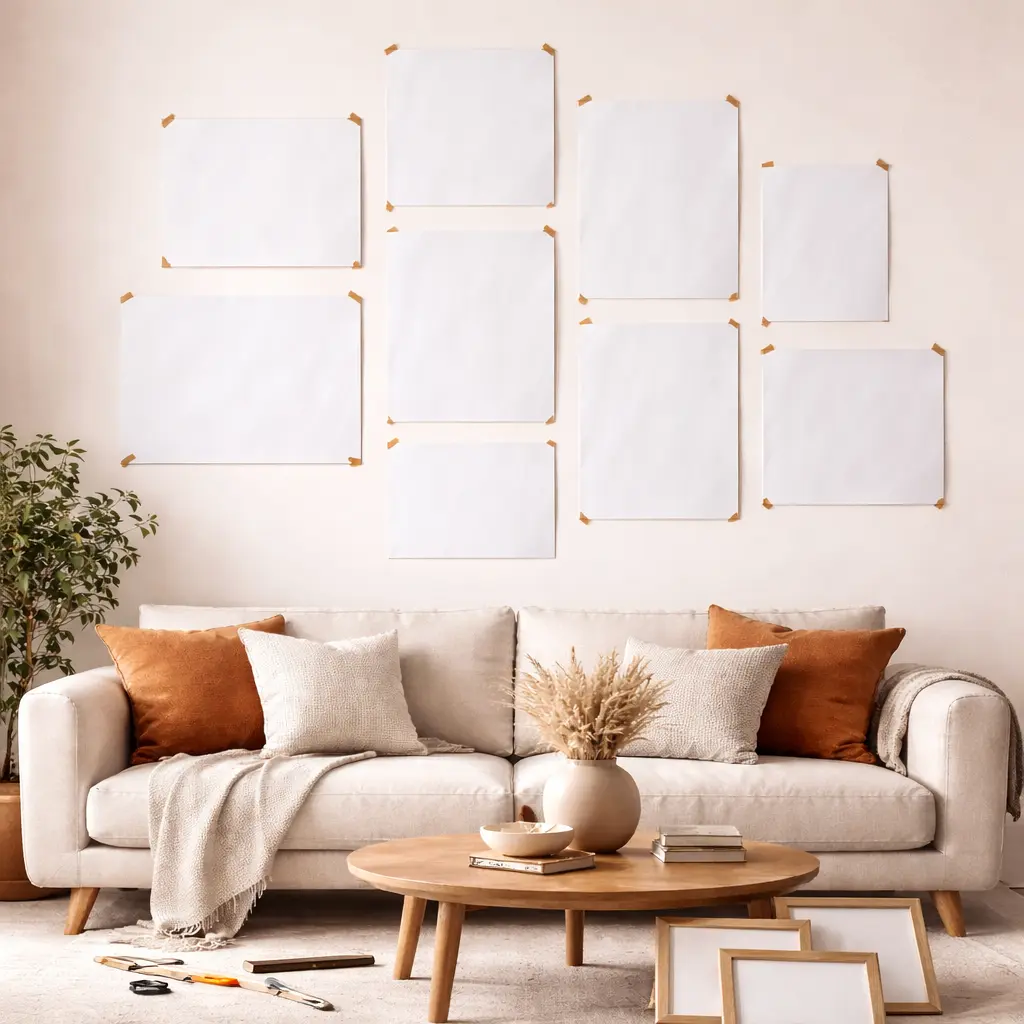
A gallery wall can completely change the feel of your living room. It adds personality, creates a focal point, and helps turn a blank wall into something that feels curated and lived-in.
The best part is that there is no single “correct” way to do it. Whether your space is modern, cozy, eclectic, or minimalist, these gallery wall ideas for living room spaces will help you build a look that feels intentional and stylish.
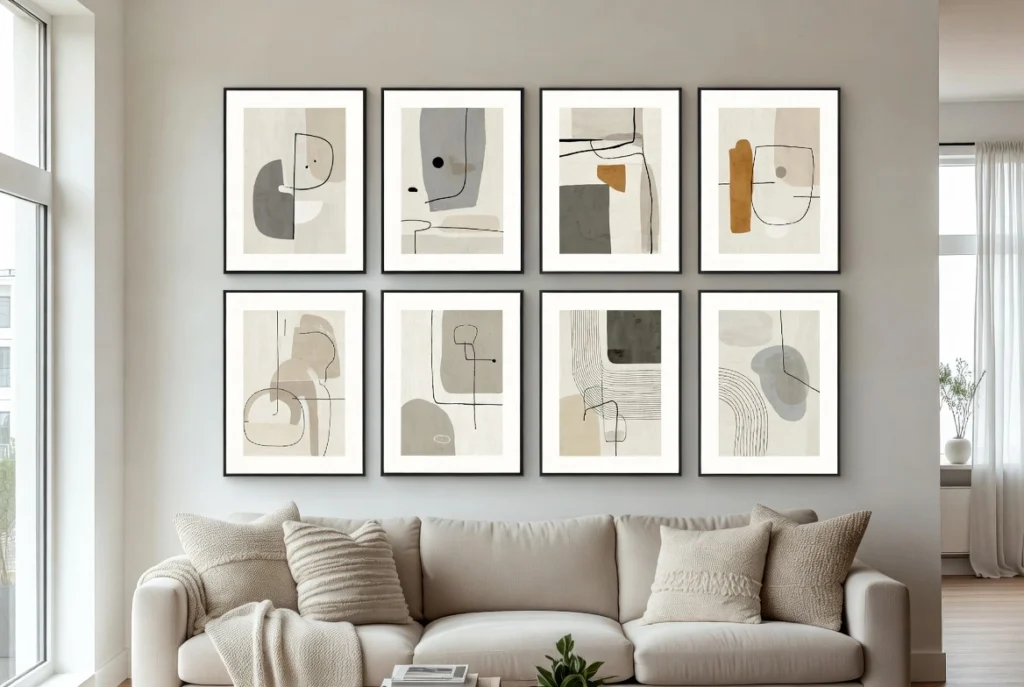
1. Start with a symmetrical layout
If you love a clean and balanced look, a symmetrical gallery wall is one of the easiest ways to begin. Use frames of similar size and align them in a grid or a centered arrangement above a sofa, console, or fireplace.
This style works especially well in modern, Scandinavian, and transitional interiors. It gives your living room structure and makes even a small collection of prints feel polished.
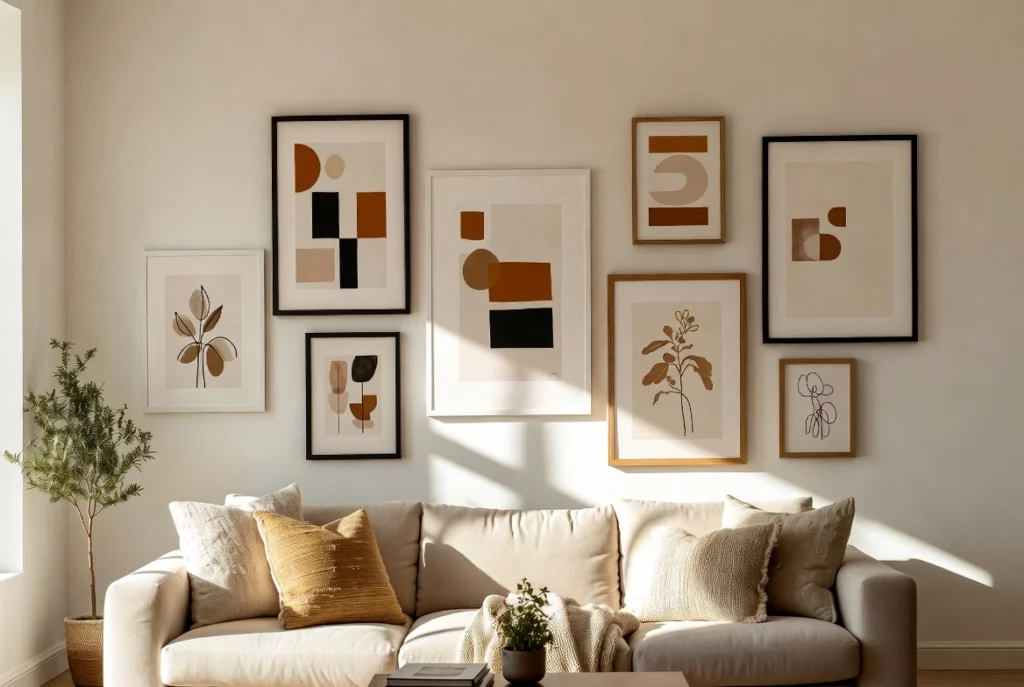
2. Mix frame sizes for a collected look
For a more relaxed and designer-style effect, combine different frame sizes in one arrangement. Use a larger piece as an anchor, then build around it with medium and smaller prints.
This approach makes the wall feel layered and personal rather than overly formal. It is also a great choice if you are working with art you already own and want the display to feel naturally collected over time.
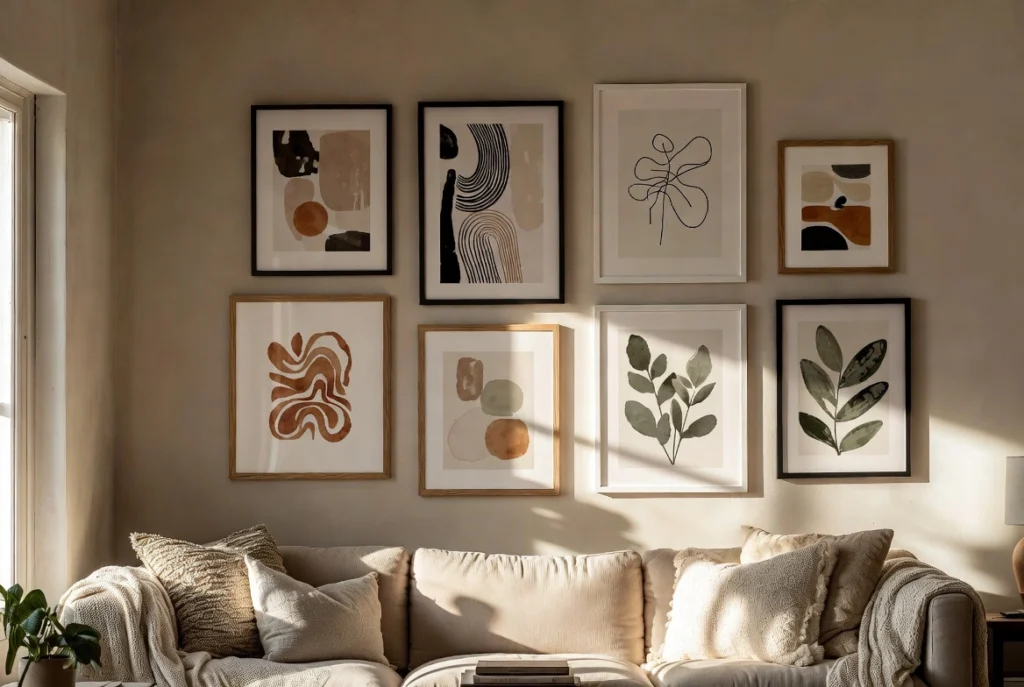
3. Choose one color palette
One of the simplest ways to make a gallery wall look cohesive is to keep the artwork within the same color family. Soft neutrals, earthy browns, muted greens, or black and white tones can tie different prints together beautifully.
This is a smart option if you want variety without visual clutter. Even when the subjects are different, a shared palette helps the whole wall feel calm and intentional.
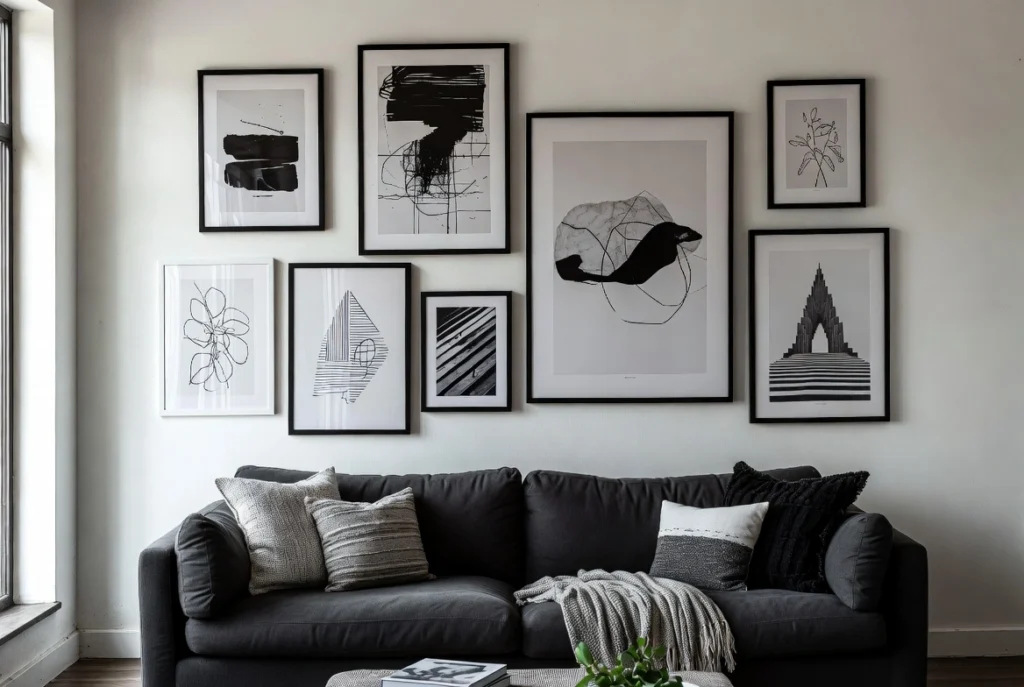
4. Create contrast with black and white art
If your living room already has a lot of color, black and white prints can bring balance. They add sophistication, sharpen the overall look, and work with almost any furniture style.
Black frames create a bold graphic effect, while white or natural wood frames soften the presentation. This is one of the most timeless gallery wall ideas living room decorators return to again and again.
5. Use one oversized piece as the focal point
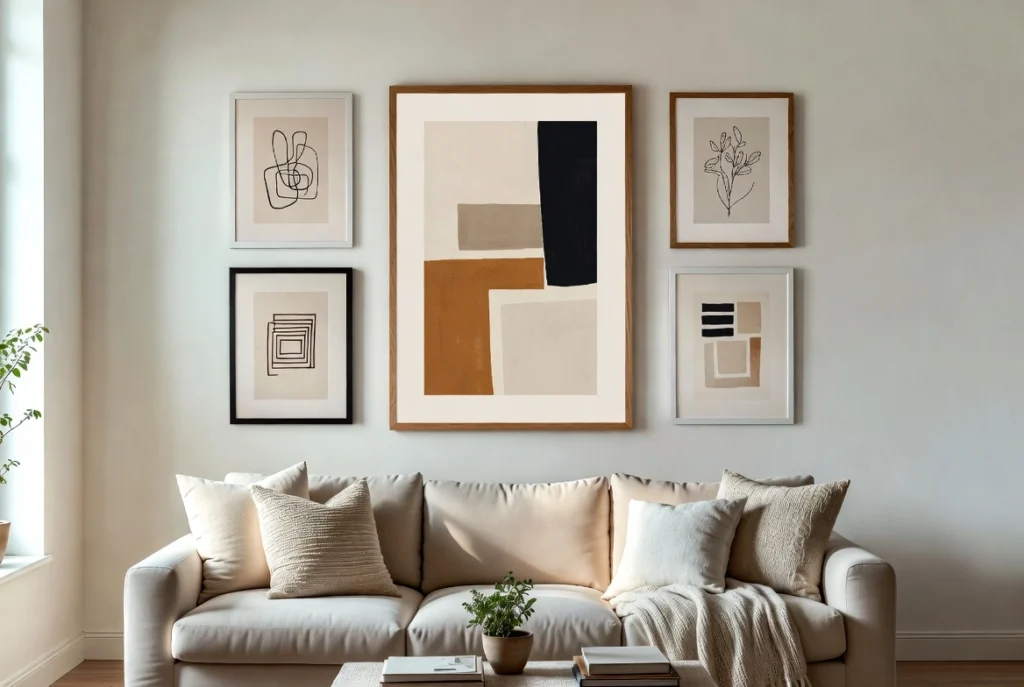
A gallery wall does not always need many pieces of equal importance. You can start with one large statement poster or art print, then surround it with smaller complementary works.
This creates hierarchy and helps the eye know where to land first. It is especially effective in larger living rooms where a small arrangement might get lost on the wall.
6. Extend the gallery wall vertically
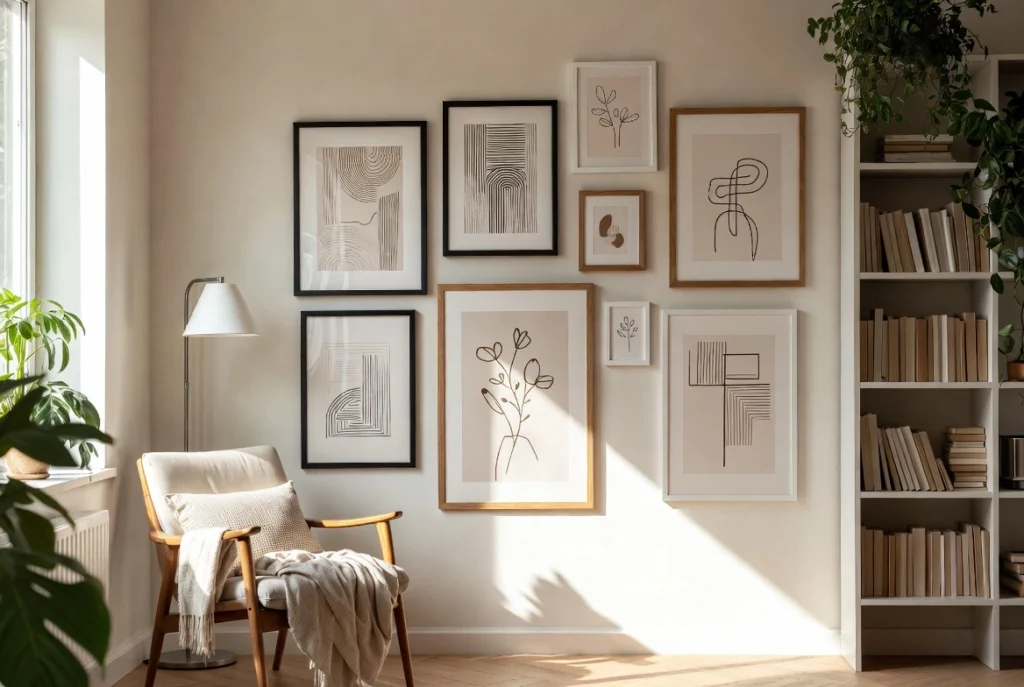
If your living room has high ceilings or a narrow empty wall, think vertically instead of horizontally. A tall arrangement can emphasize height and make the room feel more architectural.
This works well beside a TV wall, next to a bookshelf, or in an awkward corner that needs visual energy. Vertical styling is also useful in apartments where wall space may be limited but ceiling height can still be used to your advantage.
7. Blend art with personal elements
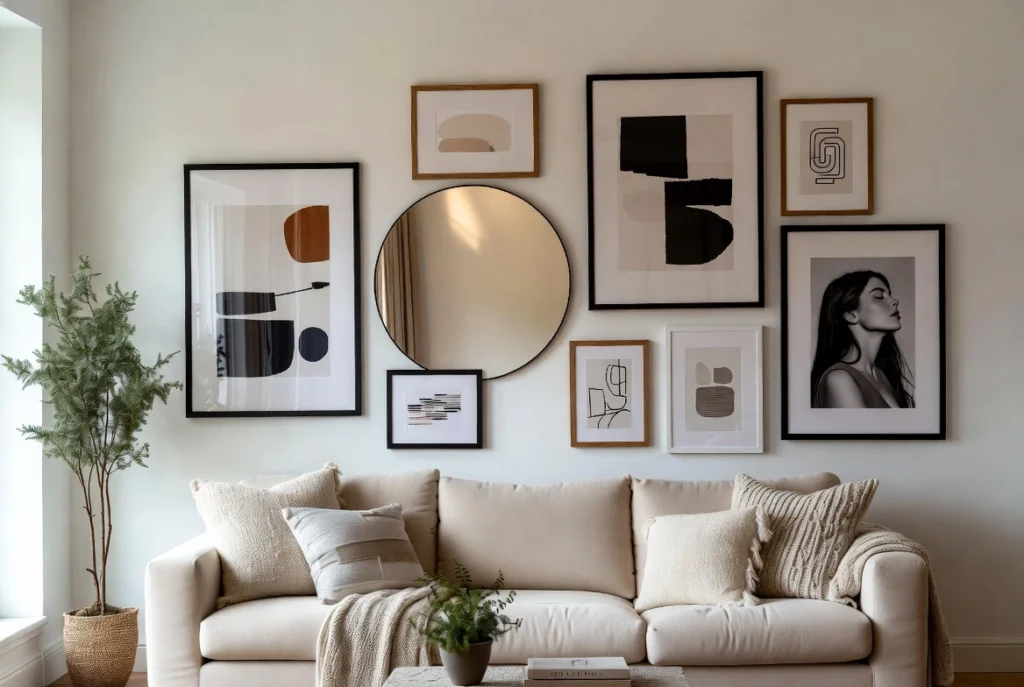
A gallery wall feels warmer when it includes more than framed prints. Add a small mirror, a sculptural wall object, or a personal photograph to create depth and character.
The key is to keep a common thread, such as matching tones, similar frame styles, or a repeated shape. This makes the mix feel curated rather than random.
8. Match the wall to your interior style
Your gallery wall should feel connected to the rest of the room. In a minimalist living room, choose simple line art or abstract prints with breathing space between frames. In a boho room, combine organic shapes, warmer tones, and more varied layouts.
When the wall reflects the style already present in your furniture, textiles, and lighting, the whole room feels more harmonious. Think of the gallery wall as an extension of the interior, not a separate decorative element.
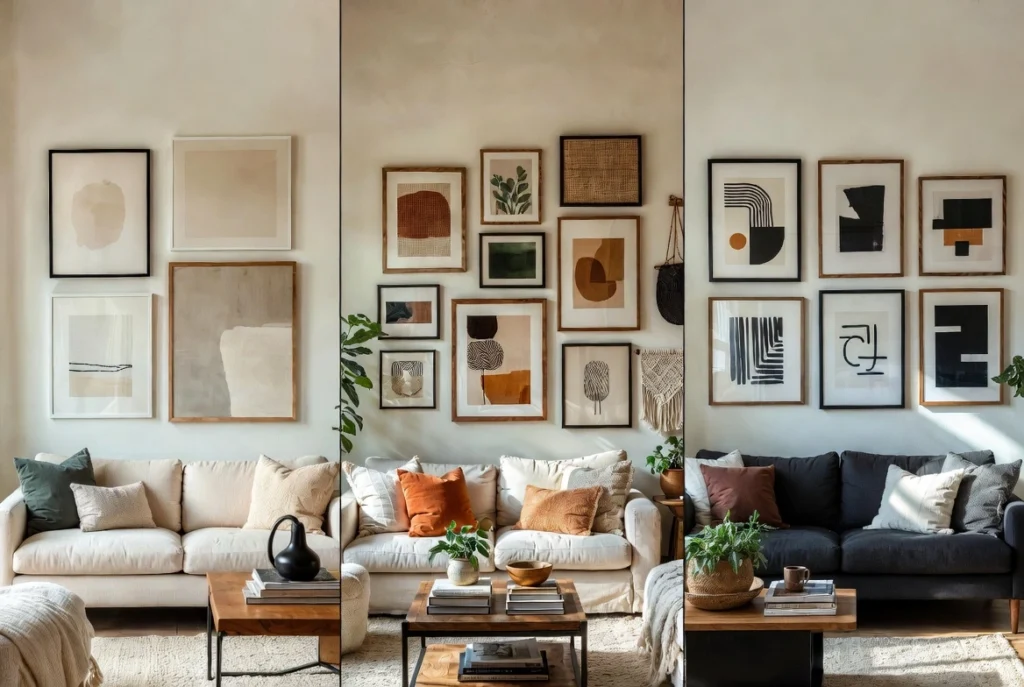
9. Build around the sofa
The wall above the sofa is usually the most natural place for a gallery arrangement. It is highly visible, easy to anchor visually, and often serves as the main focal zone in the living room.
To make it work, keep the arrangement roughly two-thirds the width of the sofa. Leave enough space above the backrest so the art feels connected to the furniture without looking cramped.
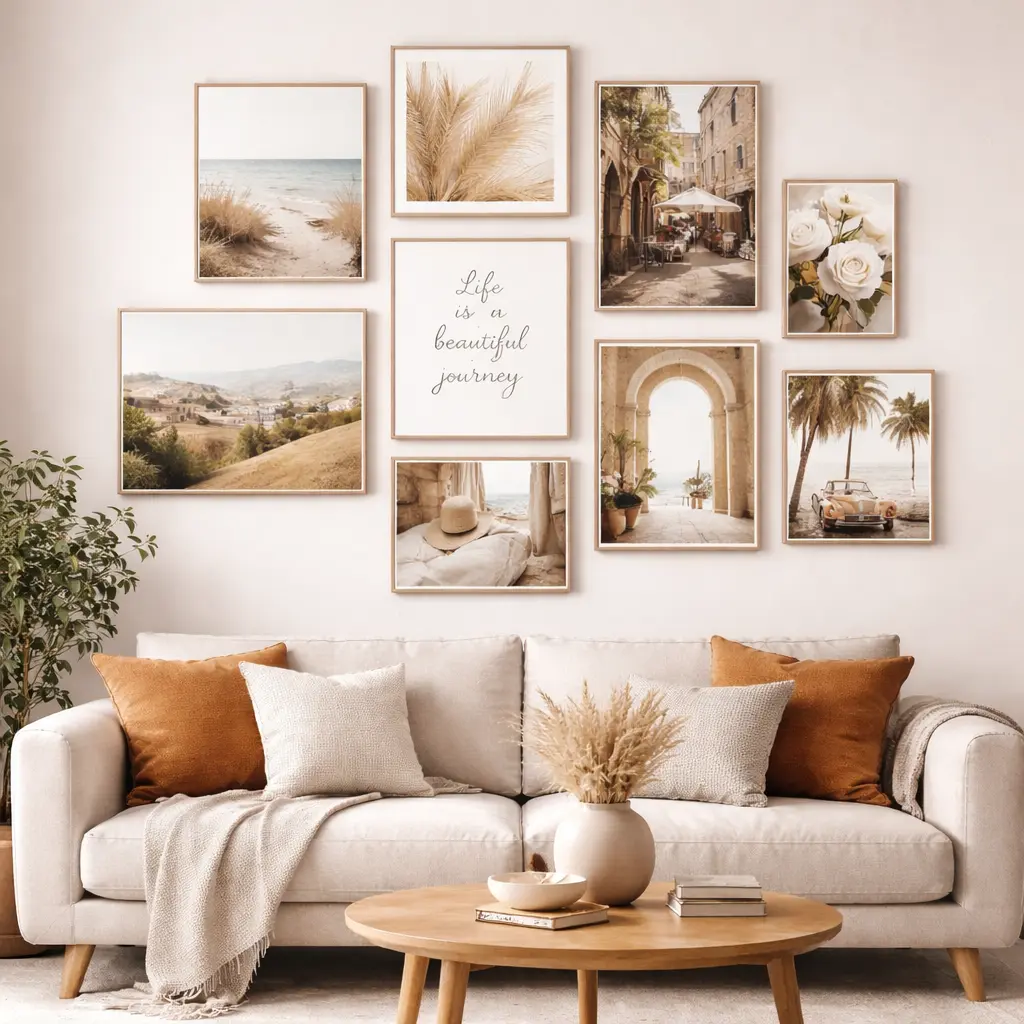
10. Keep spacing consistent
No matter which style you choose, spacing is what makes a gallery wall feel finished. Aim for even gaps between frames so the arrangement reads as one composition rather than separate pieces scattered across the wall.
Before hanging, lay everything out on the floor or use paper templates on the wall. This small extra step helps you avoid unnecessary holes and gives you confidence in the final layout.